- Published on
7 Best Tokyo Suburbs for Expats: The Definitive 2025 Relocation Guide
- Authors

- Name
- John
- 7 Best Tokyo Suburbs for Expats: The Definitive 2025 Relocation Guide
- Tokyo Geography 101: The 23 Wards vs. The Tama Area
- 1. Kichijoji: The "Gold Standard" (Musashino City)
- 2. Shimokitazawa: The Indie Escape (Setagaya Ward)
- 3. Futako-Tamagawa: The "Premium" Family Choice (Setagaya Ward)
- 4. Musashikosugi: The Modern Hub (Kawasaki)
- 5. Nakano: The "Budget" Shinjuku (Nakano Ward)
- 6. Jiyugaoka: "Little Europe" (Meguro Ward)
- 7. Ogikubo: The Commuter's Cheat Code (Suginami Ward)
- The 2025 Suburb Comparison Table
- Infrastructure: What Actually Matters for Expats
- The "End of the Line" Hack
- Final Verdict: Which One Should You Choose?
7 Best Tokyo Suburbs for Expats: The Definitive 2025 Relocation Guide
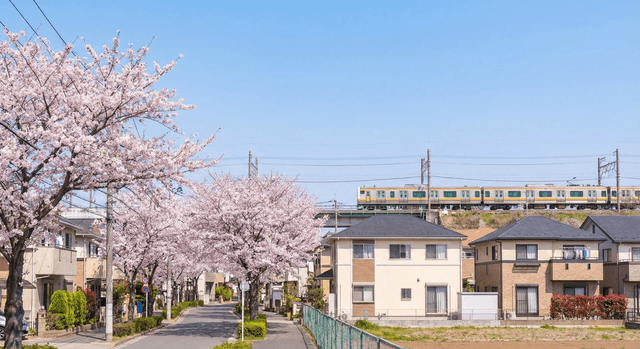
Moving your entire life to Tokyo is a massive undertaking, and most of the advice you'll find online is either sugar-coated or written by people who haven't actually squeezed onto a Den-en-toshi Line train at 8:30 AM. You'll see plenty of bloggers telling you to live in "central" spots like Shibuya or Minato. My advice? Don't. Unless you have a massive corporate housing budget or a strange desire to live in a windowless concrete box, you're much better off in the suburbs.
But "suburb" in Tokyo isn't what you think it is. It isn't about car-dependency or quiet cul-de-sacs. It's about finding a self-contained neighborhood with its own soul, better parks, and significantly lower rent, all while staying within 20 minutes of the major hubs.
Here is the reality of the best Tokyo suburbs for expats in 2025, including the parts most real estate agents won't tell you.
Tokyo Geography 101: The 23 Wards vs. The Tama Area
If you're looking at a map, you need to draw a mental line. Understanding this distinction will save you from accidentally renting a place that requires a 90-minute commute.
- The 23 Wards (Tokubetsu-ku): This is the core. If you live here, you're "in" the city. Even the suburbs within the 23 Wards (like Kichijoji or Nakano) are dense, bustling, and highly connected.
- The Tama Area: Everything to the west. This is where you find "cities within the city" like Mitaka, Tachikawa, or Hachioji. You get significantly more space for your yen here, but you're trading it for a commute that will eventually make you miserable if you have to do it five days a week.
The Rule: Unless you work remotely or specifically want a quiet, semi-rural life, try to stay inside the 23 Wards or just on the western border.
1. Kichijoji: The "Gold Standard" (Musashino City)
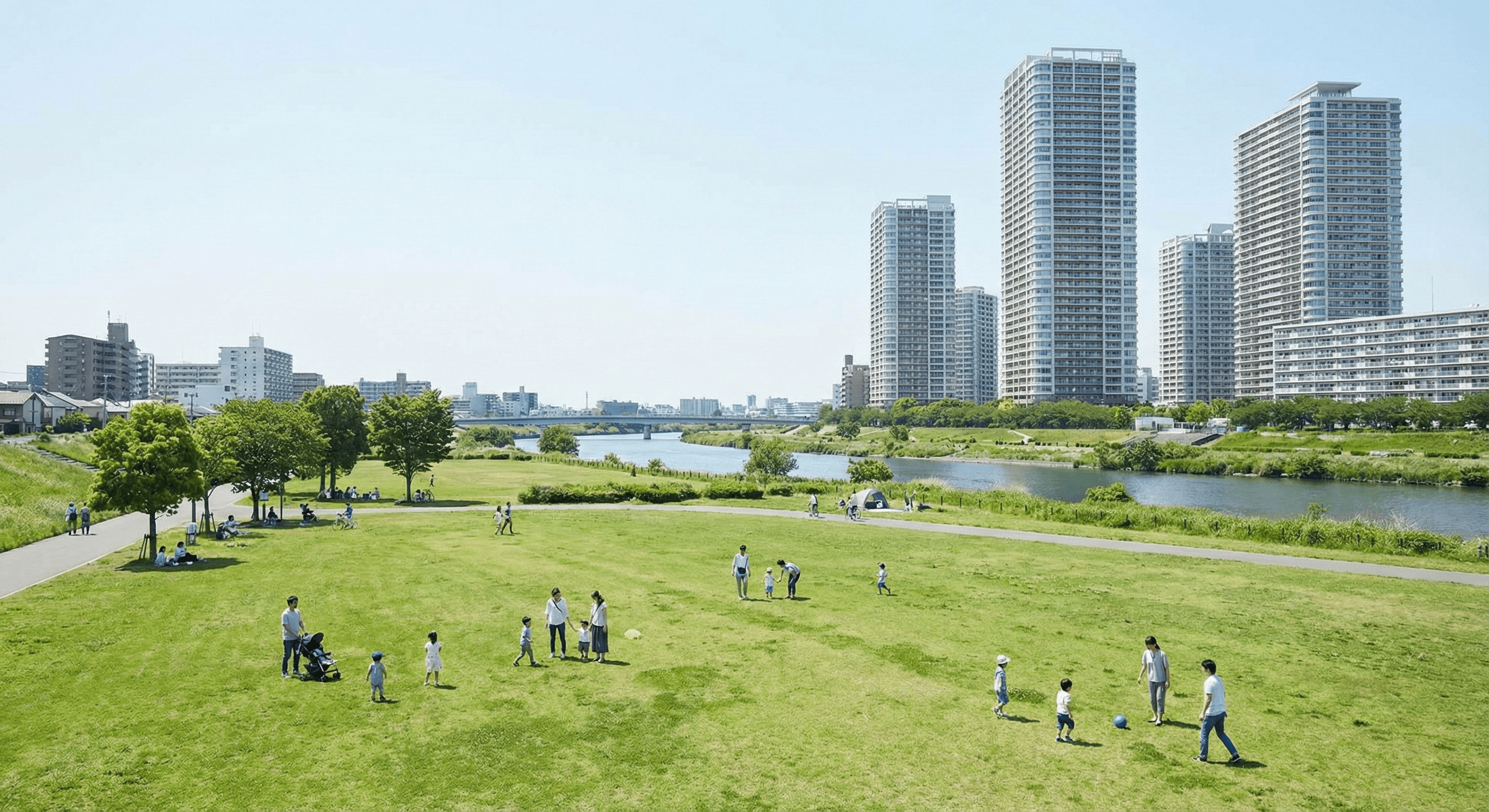
Kichijoji has topped "most desirable place to live" polls in Japan for over a decade for a reason. It centers around Inokashira Park, which is one of the few places in Tokyo where you can actually breathe and see a horizon line.
- The Commute: 15 minutes to Shinjuku on the JR Chuo Line / 18 minutes to Shibuya on the Keio Inokashira Line.
- The Vibe: It's the perfect blend of high-end department stores and "Harmonica Alley"—a maze of tiny, post-war standing bars. It's walkable, green, and trendy without being as exhausting as Harajuku.
- The Reality Check: Because everyone wants to live here, you're paying a "Kichijoji tax." Rent is high for the distance from central Tokyo. Also, the Chuo Line is the most unreliable line in the city. If there's a delay (and there often is), the platform at Kichijoji becomes a safety hazard.
2. Shimokitazawa: The Indie Escape (Setagaya Ward)
If you hate suit-and-tie culture, go to Shimokita. It's the epicenter of Tokyo's subculture—vintage clothes, indie theaters, and a coffee scene that actually cares about the beans.
- The Commute: A literal 5-minute hop to Shibuya on the Keio Inokashira Line.
- The Vibe: Low-rise and intimate. Since they moved the tracks underground, the area has opened up with pedestrian-friendly community spaces like "Reload." It feels like a village that happens to be next to the world's busiest crossing.
- The Reality Check: It is being heavily gentrified. The DIY charm that made it famous is being replaced by polished, expensive developments like Mikan Shimokita. It's still great, but it's losing the "gritty" edge that used to keep it cheap.
3. Futako-Tamagawa: The "Premium" Family Choice (Setagaya Ward)
"Nikotama" is where you go when you have a family, a dog, and a decent salary. It sits right on the Tama River, offering miles of running paths and open sky that you just can't find in Shinjuku.
- The Commute: 15 minutes to Shibuya on the Tokyu Den-en-toshi Line.
- The Vibe: Very "Upper East Side." Manicured, expensive, and corporate (it's the HQ for Rakuten). It has some of the best shopping malls in the city.
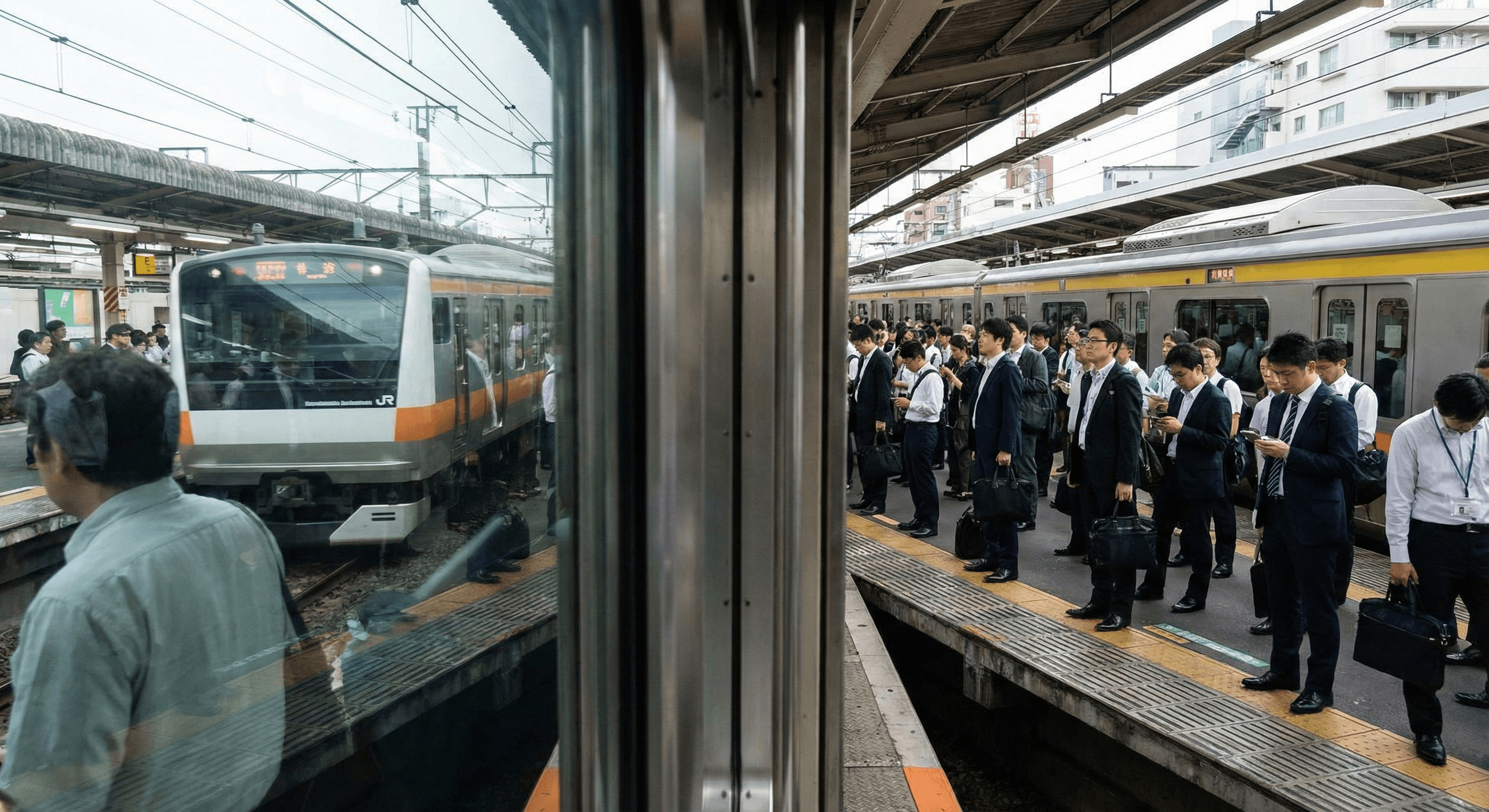
- The Reality Check: The Den-en-toshi Line is a nightmare. It consistently has the highest congestion rates in the city. Expect to be physically pushed into the train by a station attendant during rush hour. If you value personal space, this is not the line for you.
4. Musashikosugi: The Modern Hub (Kawasaki)
Technically across the river in Kawasaki, Musashikosugi isn't "charming" in the traditional sense. It's a forest of brand-new glass and concrete tower mansions. But from a purely logical standpoint, it's hard to beat.
- The Commute: 18m to Tokyo Station; 13m to Shibuya; 15m to Yokohama.
- The Vibe: Vertical and efficient. Huge malls like Grand Tree are directly connected to the station, making life incredibly convenient for busy professionals.
- The Reality Check: It's a flood risk zone. During the 2019 typhoon, some of these fancy towers lost all power and sewage function because the basements flooded. Never sign a lease here without checking the official Hazard Map first.
5. Nakano: The "Budget" Shinjuku (Nakano Ward)
Nakano is the unpretentious neighbor to Shinjuku. It's famous for Nakano Broadway (a nerd paradise), but the real draw is the "shotengai"—the covered shopping streets where you can find groceries and essentials for 30% less than you'd pay three stops away.
- The Commute: 5 minutes to Shinjuku on the Chuo Line.
- The Vibe: Bustling, authentic, and slightly gritty. It feels like a neighborhood where people actually live and work, not just a tourist stop.
- The Reality Check: The housing stock is hit or miss. There are a lot of older "Mokuzou" (wood-frame) buildings here. They look cute until you realize the insulation is non-existent and you can hear your neighbor's phone notifications through the wall.
6. Jiyugaoka: "Little Europe" (Meguro Ward)
Jiyugaoka translates to "Freedom Hill," and it's basically a slice of Paris dropped into Tokyo. It has Venice-inspired canals, high-end patisseries, and a lot of "quiet luxury."
- The Commute: 10 minutes to Shibuya on the Tokyu Toyoko Line.
- The Vibe: Sophisticated, slow, and aesthetic. It's very popular with European expats because the urban planning—with its benches and walkable boutiques—feels familiar.
- The Reality Check: The "Luxury Tax" is real. Everything here—from the bread to the head of lettuce—costs more than in Nakano or Ogikubo. If you aren't pulling a high salary, Jiyugaoka will feel restrictive.
7. Ogikubo: The Commuter's Cheat Code (Suginami Ward)
Ogikubo is the best-kept secret for people who actually have to work in a central office. It's a quiet, established residential area with some of the best ramen in Japan.
- The Commute: 10 minutes to Shinjuku on the Chuo Line.
- The Vibe: Mature, safe, and intellectual. It's where people go when they want to escape the "trendy" crowds.
- The Reality Check: The Marunouchi subway line starts here. In a city where you usually have to fight for an inch of floor space, being able to walk onto an empty car and get a seat every single morning is a massive quality-of-life upgrade. The downside? Zero nightlife. If you want a 2 AM drink, you're taking a taxi.
The 2025 Suburb Comparison Table
Don't just look at the rent; look at the "Crush Factor." That's the percentage of congestion you'll deal with during the morning rush.
| Suburb | Major Line | Commute Hub | Rent (1LDK) | The "Crush" Factor | English Friendly |
|---|---|---|---|---|---|
| Kichijoji | JR Chuo | 15m (Shinjuku) | ¥185k | 8/10 (Heavy) | High |
| Shimokita | Odakyu | 5m (Shibuya) | ¥210k | 6/10 (Fair) | Very High |
| Nikotama | Den-en-toshi | 15m (Shibuya) | ¥230k | 10/10 (Extreme) | High |
| M-Kosugi | JR / Tokyu | 18m (Tokyo) | ¥175k | 8/10 (Heavy) | Medium |
| Nakano | JR Chuo | 5m (Shinjuku) | ¥160k | 9/10 (Heavy) | Medium |
| Jiyugaoka | Tokyu Toyoko | 10m (Shibuya) | ¥240k | 7/10 (Busy) | Very High |
| Ogikubo | Marunouchi | 10m (Shinjuku) | ¥165k | 3/10 (Get a seat!) | Medium |
Infrastructure: What Actually Matters for Expats
When you're choosing a suburb, stop looking at the "vibe" and start looking at the infrastructure.
The Train Line is Your Life
Tokyo life is linear. If your office is in Shibuya, live on the Toyoko Line or the Inokashira Line. If you have to transfer twice just to get to work, you will burn out within six months. The transfers at stations like Shinjuku or Tokyo are not "short walks"—they are 10-minute treks through underground seas of people.
Grocery Store Hierarchy
Don't assume all suburbs have the same food access.
- High End (Imported Goods): Seijo Ishii, Meidi-ya, Dean & Deluca (Found in Jiyugaoka, Nikotama).
- Mid Range: Tokyu Store, Life, Ito-Yokado (Found in Musashikosugi, Kichijoji).
- Budget: Okuwa, Seiyu, Gyomu Super (Found in Nakano, Ogikubo).
English-Speaking Healthcare
If you don't speak Japanese, Nakano and Ogikubo will be harder for you. Kichijoji and Jiyugaoka have a much higher concentration of international clinics and English-speaking dentists.
The "End of the Line" Hack
I tell every expat this: look for the terminal stations. Living at a station where a train line starts (like Ogikubo for the Marunouchi Line or Mitaka for the Tozai Line) is a life-hack. You can wait 5 extra minutes for the next train to pull in, walk onto an empty car, and secure a seat. In a city where most people spend 90 minutes a day standing in someone else's armpit, this is the ultimate luxury.
Final Verdict: Which One Should You Choose?
- If you want the "cool" Tokyo life: Go to Shimokitazawa.
- If you have a family and want green space: Go to Futako-Tamagawa.
- If you work in a corporate office and want zero commute stress: Go to Ogikubo.
- If you're on a budget but need to be close to the action: Go to Nakano.
Moving to Tokyo soon? Rent is only half the battle. You need to know what you're actually renting. Check out our Tokyo Apartment Layout Guide: 1R vs 1K vs 1LDK to understand the difference between a "room" and a "closet," or you might end up living in a space where your fridge is literally next to your pillow.