- Published on
Typical Tokyo Apartment Layouts: The Ultimate 2025 Guide to 1R, 1K, 1DK & 1LDK
- Authors

- Name
- John
If you are planning to relocate to Japan, your first major hurdle isn't the language—it's the floor plan.
You've likely spent hours scrolling through Suumo or GaijinPot, seeing codes like 1R, 1K, 1DK, or 2LDK. To the uninitiated, these look like arbitrary labels. To a seasoned expat in Tokyo, they represent a very specific lifestyle, a predictable price point, and a set of trade-offs regarding noise, smell, and "closet-living."
This guide is the reality check you need before signing a lease in the world's most populous metropolitan area.

1. Decoding the Acronyms: What Do They Actually Mean?
In Japan, the number represents the number of bedrooms. The letters indicate the type of common area.
1R (One Room): The "Minimalist" (or "Closet") Choice
Average Size: 13 m² - 20 m² Estimated Rent (2025): ¥65,000 - ¥95,000
The 1R is the most basic unit. The "R" stands for "Room," and that is exactly what you get: one single space where you sleep, eat, and cook. There is no wall or door separating the kitchen area from the sleeping area.
- The Reality Check: Because there is no divider, if you cook fish or curry, your bedsheets will smell like your dinner for days. These are usually the cheapest units, but they are incredibly cramped for anyone who isn't a student or a minimalist.
1K (One Room + Kitchen): The Expat Standard
Average Size: 18 m² - 25 m² Estimated Rent (2025): ¥80,000 - ¥115,000
The 1K is the "gold standard" for single foreigners moving to Tokyo. The "K" signifies a separate kitchen area, usually separated from the bedroom by a door.
- Why it Matters: That single door is a life-saver. It provides better sound insulation from the hallway and keeps cooking smells and humidity (from the bathroom) away from your living space.
1DK (One Room + Dining/Kitchen): The Retro Option
Average Size: 25 m² - 35 m² Estimated Rent (2025): ¥95,000 - ¥145,000
The 1DK features a dedicated dining and kitchen area (D+K) that is separate from the bedroom. It's usually large enough to fit a small dining table, but not a full sofa.

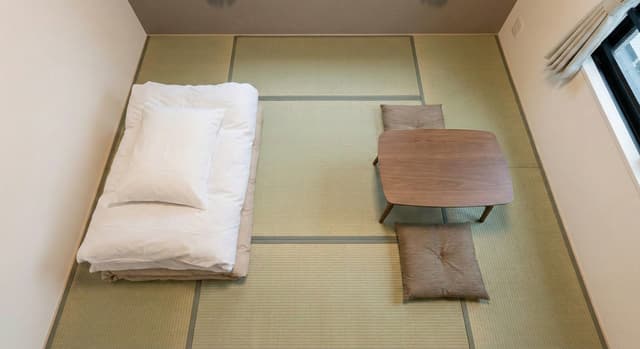
- The Reality Check: You'll notice many 1DKs are in older buildings (1980s-90s). While they offer more space for your money, they often lack modern insulation and might still use traditional "tatami" rooms.
1LDK (One Room + Living/Dining/Kitchen): The "Proper" Apartment
Average Size: 35 m² - 50 m² Estimated Rent (2025): ¥145,000 - ¥230,000+
The 1LDK is what most Westerners consider a "real" one-bedroom apartment. You have a proper bedroom and a separate living room large enough for a sofa, a TV, and a dining area.
- The Luxury of Space: In Tokyo, a 1LDK is considered a "spacious" home for a single person or a "cozy" home for a couple. If you work from home, this is the minimum layout you should target to maintain your sanity.
2. The "Jo" (J) Measurement: Why You Must Understand It
Japanese real estate doesn't just use square meters (m²); it uses Jo (J), which refers to the size of a standard tatami mat.
Even if your apartment has hardwood floors, the listing will say "Living Room: 6.0 J." In Tokyo, the standard for 1 Jo is regulated at:
1 Jo ≈ 1.62 m² (approx. 17.4 sq ft)
What does this look like in practice?
- 4.5 J: A "walk-in closet" size. You can fit a futon, but a desk will be a struggle.
- 6.0 J: The standard bedroom size. It fits a semi-double bed and a small desk.
- 10.0 J+: A very large room by Tokyo standards.
3. Construction Types: The Secret to a Quiet Life
When browsing, look at the Structure (構造) section. This is where most people make their biggest mistake.
Mokuzou (Wooden Frame)
- Pros: Cheapest rent; "breathable" in humid summers.
- Cons: Zero soundproofing. You will hear your neighbor's phone vibrate. Poor insulation means freezing winters and expensive AC bills in summer.
- Verdict: Avoid if you value privacy or sleep.
RC (Reinforced Concrete) or SRC (Steel Reinforced Concrete)
- Pros: Excellent soundproofing and earthquake resistance. Higher fire safety ratings.
- Cons: Higher rent; can be prone to mold if not ventilated properly because they are so airtight.
- Verdict: This is what you want. In Japan, these buildings are often called "Mansions" (マンション), whereas wooden buildings are called "Apartments" (アパート).
4. Design Quirks: The "Only in Japan" Features
A typical Tokyo apartment has specific design features that you won't find in the US or Europe:
- The Genkan (玄関): This is the sunken entryway. It is strictly for shoes. Entering the main floor with shoes on is the fastest way to lose your security deposit.

B/T Kakuri (B/T別): This means the Bath and Toilet are separate. In cheaper 1R units, you get a "Unit Bath" (a plastic room with a toilet and tub together). Most expats regret getting a unit bath after three months—aim for "B/T Kakuri."
The Washlet: Almost every modern Tokyo apartment comes with a heated toilet seat and bidet functions. It is a life-changing luxury you will miss the moment you leave Japan.
The "Goshitaki" (Auto-Bath): Higher-end 1LDKs have a control panel that lets you set the bath temperature from the kitchen. It will even "talk" to you to tell you the water is ready.
5. The Financial Wall: Upfront Costs in 2025
Renting a "typical" apartment in Tokyo requires a massive upfront investment. It is common to pay 4 to 6 months of rent before you even get the keys.
| Fee Type | Amount | Refundable? |
|---|---|---|
| Shikikin (Deposit) | 1-2 Months | Yes (partially) |
| Reikin (Key Money) | 1-2 Months | No (It's a gift to the landlord) |
| Agency Fee | 1 Month + Tax | No |
| Guarantor Fee | 0.5 - 1 Month | No (Required for almost all foreigners) |
| Lock Change Fee | ¥15,000 - ¥30,000 | No |
| Fire Insurance | ¥15,000 - ¥25,000 | No |
Pro Tip: Look for "Zero-Zero" properties (Zero Deposit, Zero Key Money). Just be careful—these often have slightly higher monthly rents or strict "cleaning fees" upon exit to make up the difference.
6. Utilities: The Hidden Monthly Costs
Don't just budget for rent. You need to account for:
- Electricity: ¥5,000 - ¥12,000 (Expect high bills in August and January).
- Gas: ¥3,000 - ¥6,000. Warning: Check if the building uses City Gas (cheap) or LP Gas (expensive). LP Gas can double your monthly bill.
- Water: ¥2,000 - ¥3,000 (Usually billed every two months).
- Internet: ¥4,000 - ¥6,000. Many "Free Internet" buildings are painfully slow during peak hours.
Final Comparison: Which Layout Should You Choose?
| Feature | 1R | 1K | 1DK | 1LDK |
|---|---|---|---|---|
| Best For | Students / Solo Minimalists | Single Professionals | Couples on a Budget | Couples / Remote Workers |
| Privacy | Low (All in one) | Medium (Door to kitchen) | High (Separate bedroom) | Highest (Full living room) |
| Cooking | Minimal (1 burner) | Basic (2 burners) | Full Kitchen | Full Kitchen + Counter |
| Noise Risk | High | Medium | Medium | Low (Usually RC buildings) |
Moving to Tokyo? Start Your Search Early.
The Tokyo rental market moves faster than almost anywhere else on earth. A "typical" 1K in a popular ward like Setagaya or Shibuya will often be listed and rented within 48 hours.
If you're still weighing your options, check out our guide to the Japanese Suburbs: A Guide to the Best Neighborhoods Outside Tokyo to see which neighborhoods offer the best balance of space and commute time.